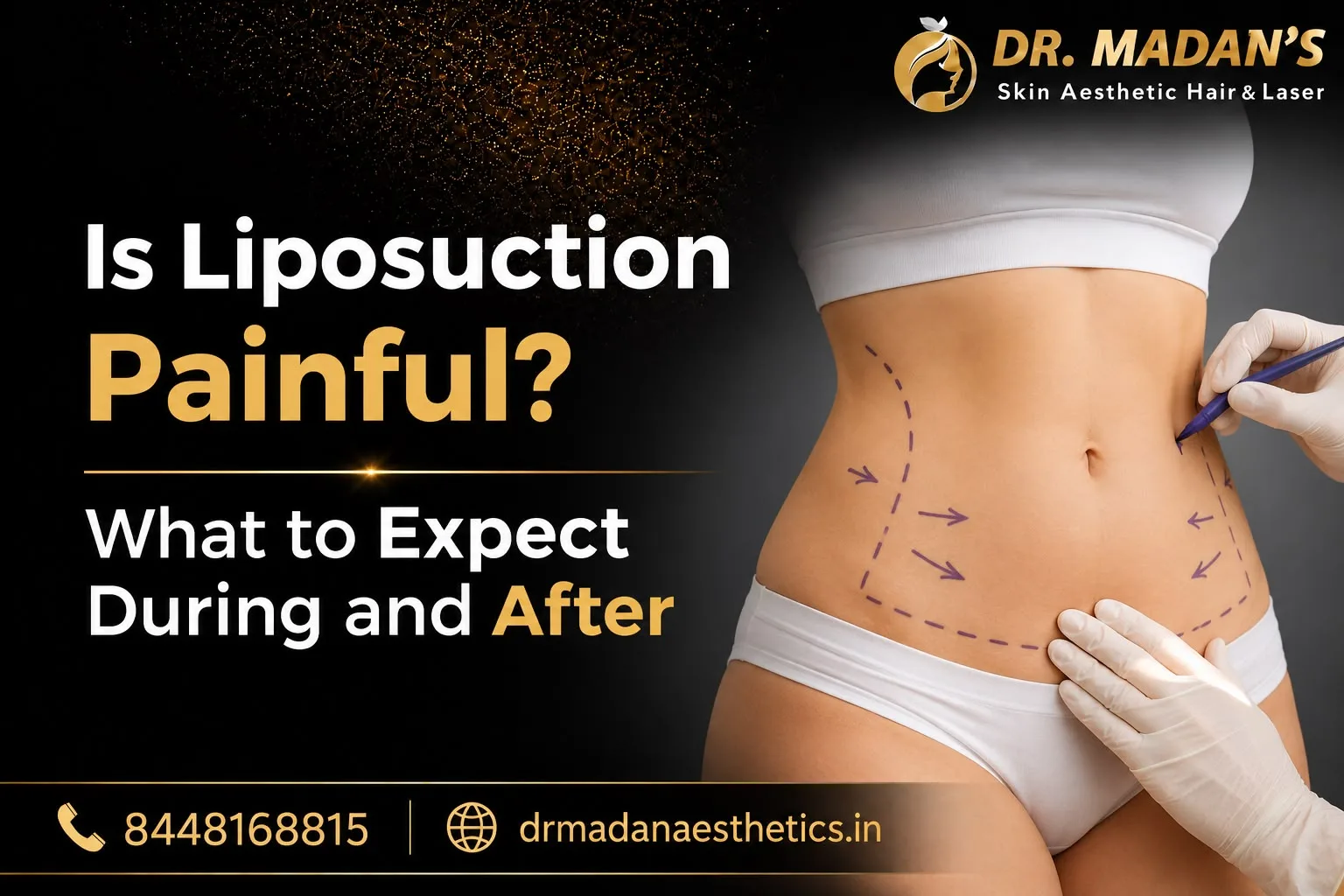
Liposuction is a common cosmetic procedure, but many patients worry about pain and recovery. At Dr Madan Aesthetics in Delhi, patients receive clear guidance about what to expect before, during, and after treatment. During the procedure, anesthesia helps numb the treated area, reducing discomfort. After surgery, patients may experience soreness, swelling, bruising, and tightness for several days. These symptoms generally improve gradually over the following two to three weeks. Recovery varies depending on the treatment area, the amount of fat removed, and personal pain tolerance.
Dr Puneet Madan (MBBS, MD Dermatology) brings over 12 years of experience in skin and cosmetic treatments. At Dr Madan Aesthetics, each patient receives an individual consultation to discuss treatment goals, suitability, expected discomfort, and recovery requirements. Planned follow-up appointments help monitor healing and address concerns during recovery. The clinics in Vikas Puri and Krishan Vihar, West Delhi, use FDA-approved equipment and maintain strict hygiene and safety standards. Patients considering body contouring can call +91-8448168815 to arrange a consultation and discuss their concerns, comfort, and recovery expectations with the clinic team.
Liposuction Pain at a Glance
| Question | Typical answer |
|---|---|
| Pain during the procedure | Minimal; you may feel pressure or movement, not sharp pain |
| Anaesthesia used | Tumescent local anesthesia, sedation or general anesthesia |
| When soreness is strongest | First 2 to 3 days after surgery |
| When most discomfort settles | Within 2 to 3 weeks |
| Compression garment | Usually worn for 4 to 6 weeks |
| Return to desk work | Often within 3 to 7 days |
Does Liposuction Hurt During the Procedure?
For most patients, liposuction does not hurt during the procedure. Before removing any fat, the treatment area is numbed. Many cases use tumescent anesthesia, where a large volume of fluid containing a local anesthetic and a blood-vessel-constricting medication is injected into the fat. This numbs the area, reduces bleeding and makes fat easier to remove.
You may feel a brief sting when the first injections go in. During treatment, patients may notice pressure, movement, or vibration as the thin cannula passes beneath the skin. These sensations can feel unusual, but discomfort is generally manageable. The medical team can administer additional anesthetic if needed.
What Type of Anesthesia Is Used for Liposuction?
The choice of anesthesia depends on the treatment areas and the amount of fat removed. Small areas, including the chin or arms, may require local anesthesia while you remain awake. Medium procedures may involve mild sedation to help you relax. Larger treatments involving multiple areas may require general anesthesia, allowing you to sleep throughout surgery. Your doctor will recommend a suitable option after assessing your needs during consultation.
What Does Pain After Liposuction Feel Like?
Pain after liposuction is usually described as a deep, dull ache, similar to sore muscles after a hard workout or the tenderness of a large bruise. The treated area may also feel tight, swollen, and sensitive to touch. Some patients notice burning, tingling, or patches of numbness as the skin's nerves recover.
These feelings are a normal part of healing. During the first 24 to 48 hours, some anesthetic fluid may drain through the small incision sites. This is expected and usually stops within 24 to 48 hours. Bruising often looks worse than it feels and fades over two to three weeks.
How Long Does Pain After Liposuction Last?
Recovery is different for everyone, but most patients follow a similar pattern. The table below shows a typical timeline. Results vary from patient to patient, and your doctor will guide you based on your healing.
| Time after surgery | What you may feel |
|---|---|
| Day 1 to 3 | Soreness is strongest; swelling, tightness, and some fluid leakage |
| Day 4 to 7 | Pain eases noticeably; most people move around more comfortably |
| Week 2 to 3 | Mild tenderness when the area is pressed; bruising fades |
| Week 4 to 6 | Discomfort is mostly gone; some swelling and firmness remain |
| Month 2 to 6 | Numbness and lumpiness slowly settle; the final shape appears |
What Affects How Much Liposuction Hurts?
Two patients can have the same procedure and describe very different levels of discomfort. Common factors include:
- Number of areas: Treating multiple body areas in one session can increase soreness during recovery.
- Amount of fat removed: Removing more fat generally leads to more swelling and tenderness.
- Area treated: The abdomen, flanks, and thighs often feel sorer than smaller areas such as the chin.
- Personal pain threshold: Everyone feels pain differently, and anxiety can make discomfort feel stronger.
- Aftercare: Wearing the compression garment and following instructions makes recovery smoother.
How Is Pain After Liposuction Managed?
Most patients manage pain after liposuction well with simple steps. Your doctor will give you a recovery plan, which usually includes:
- Prescribed medicines: Take only the pain relief your doctor prescribes, as directed. Do not add other medicines without asking.
- Compression garment: This supports the treated area, reduces swelling, and often makes movement more comfortable.
- Gentle walking: Short walks from day one help circulation and lower the risk of blood clots.
- Comfortable rest: Sleep with support pillows so you do not lie directly on the treated area.
- Fluids and nutrition: Drink plenty of water and eat balanced meals to support healing.
- No smoking or alcohol: Both can slow healing and increase swelling, so avoid them during recovery.
- Follow-up visits: Regular check-ups let your doctor track healing and answer your questions.
How Can You Prepare for a More Comfortable Recovery?
Preparing your home before surgery can make the initial recovery period more comfortable. Patients often feel less anxious about liposuction pain after planning for their immediate needs. Helpful preparations include the following simple steps:
- Arrange support: Ask a family member or friend to drive you home and stay with you for the first day or two.
- Set up your rest area: Keep loose, front-opening clothes, extra pillows, water, and light meals within easy reach.
- Share your medical history: Tell your doctor about all medicines and supplements you take, as some may need to be paused.
- Stop smoking early: If you smoke, stopping a few weeks before surgery supports better healing.
- Write your questions: Note down your questions about pain, wound care, and garments for your consultation.
When Can You Return to Work and Daily Activities?
Many people return to desk work within three to seven days, depending on the procedure's size and how they feel. Jobs that involve standing, lifting, or physical effort may require 1 to 2 weeks off. Light walking is encouraged straight away. You can usually restart gentle exercise after two to three weeks, while heavy workouts are often delayed until four to six weeks. Always confirm these timelines with your doctor before returning to any activity.
When Should You Contact Your Doctor?
Some discomfort is normal, but certain signs need prompt attention. Contact your doctor straight away if you notice:
- Seek medical attention for severe pain or discomfort that continues worsening instead of gradually improving.
- Contact your doctor if you have a fever, chills, spreading redness, warmth, or pus around the incision sites.
- Report swelling that increases rapidly or appears significantly greater on one side.
- Seek urgent medical assessment for pain, swelling, or unusual warmth in your calf or leg.
- Get emergency medical care immediately for shortness of breath or chest pain
Frequently Asked Questions
Will I be awake during liposuction?
Your experience depends on the anesthesia used. Local anesthesia keeps you awake but numb, while general anesthesia lets you sleep through the procedure.
Is liposuction more painful than a tummy tuck?
Liposuction generally causes less discomfort than a tummy tuck, which involves larger incisions, abdominal muscle tightening, and a longer recovery period.
Does chin liposuction hurt less than body liposuction?
Chin liposuction generally causes milder soreness because it targets a smaller area, often allowing faster recovery than abdominal or thigh liposuction.
Can I shower after liposuction?
Most patients can shower within 24 to 48 hours, but follow your doctor’s advice on wound care and when to remove the compression garment.
Prepare for Liposuction With the Right Guidance
Liposuction usually involves minimal pain during surgery, followed by manageable soreness that gradually improves throughout recovery. Understanding each stage can help ease concerns and support better preparation. At Dr Madan Aesthetics, Dr Puneet Madan explains treatment steps, discusses comfort measures, and provides follow-up guidance. Call +91-8448168815 to book a consultation at our Vikas Puri or Krishan Vihar clinic and discuss your body contouring goals.