So, you’ve got a tattoo and you’re ready to remove it for reasons best known to you. Maybe the tattoo was a name, a quote, or just something that made sense at the time, but not anymore. Whatever the reason may be, you’re now staring down the laser removal path, and you can’t help but ask this question: How many sessions will it actually take to remove this thing?
The simple answer is, it isn’t the same for everyone. Tattoo removal isn’t a one-time deal, It’s a process and several things come into play which determine exactly how many sessions it will take to remove the tattoo. For better understanding, keep reading this blog to know some of the factors that determine the number of sessions.
What Actually Affects the Number of Sessions?
If you’re thinking all tattoos should require the same number of sessions to remove, you should start thinking again, only that this time you think differently. Your body type is different, your skin is different, and the ink and the type of tattoo on your skin are completely different.
All of these determine how many sessions it will take to remove the tattoo. Let’s break it down further, so you can get a better perspective:
- Tattoo Size & Where It Is: Take, for instance, all you’ve is a tiny wrist tattoo, that’s easier to remove. But if you’ve big colorful back pieces, then you should expect to undergo more sessions to remove. Also, areas with better blood flow (like arms or upper body) tend to heal faster than spots like ankles.
- The Color of Your Tattoo: Black is a nice color, and it is easier to break down. This means you need fewer sessions if the color of your tattoo is black. But if you’ve bright colors like green, blue, and yellow, you may need more sessions. These colors are stubborn and would take more sessions to fade.
- How Old Is the Tattoo: Older tattoos are already faded a bit thanks to time. That gives you a head start. But if you’ve fresh ink, it’s deeper and more vivid. This will take more sessions to remove.
- Your Skin Type: Here’s one a lot of people don’t think about. If you’ve got darker skin, the laser has to work a bit differently (lower settings to protect your skin), which might mean more sessions.
- Type of Laser Used: Not all clinics use the same tech. Newer machines like PicoSure or Q-switched lasers work better and faster. If you’re getting tattoo removal treatment in Delhi, definitely ask what type of laser they use before you book anything.
- Your Body’s Healing Game: The laser breaks the ink down, but it’s your immune system that actually clears it. So if your system’s sluggish, or you don’t take care of your body, it’s going to take longer.
Average Number of Sessions Needed
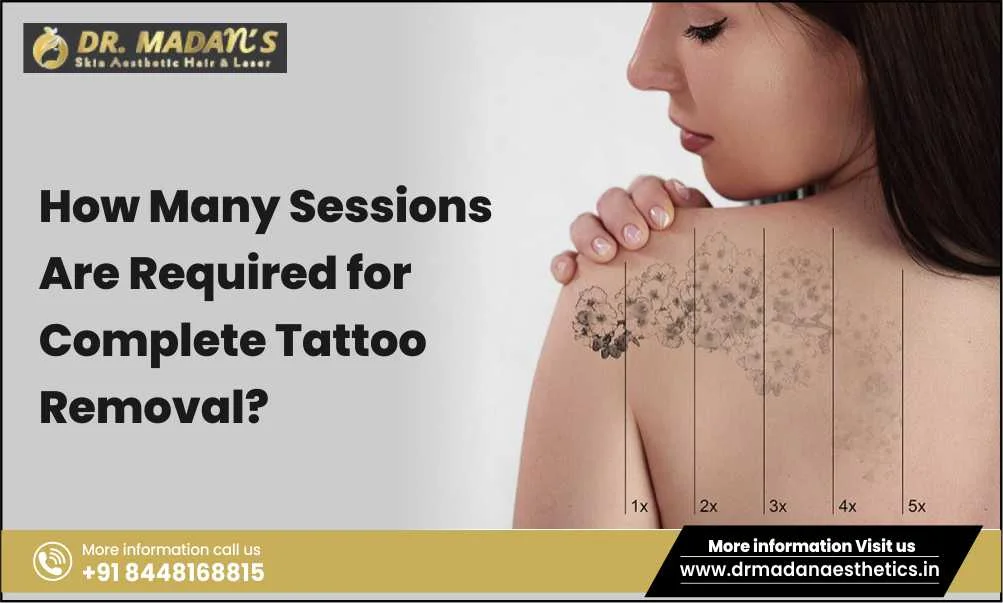
This is probably the part you care about most. In general, most people need somewhere between 6 to 10 sessions to fully remove a professional tattoo. That number can drop if your tattoo is small, old, or just done in black ink. On the other hand, if you’ve got a large piece with loads of color, or the ink was packed in deep, you could be looking at 10+ sessions.
Now, if it’s something amateur, like your cousin gave it to you with a needle and some ink from the kitchen, it might come off in fewer sessions. Maybe even 3 to 5. But again, no promises as everyone’s skin is different.
You won’t know the exact number from day one. Most clinics won’t even try to guess until they’ve seen how your skin reacts to the first couple of sessions. It’s kind of a wait-and-see game.
Time Gap Between Sessions – Importance of Healing Time
You will find out something you’re likely not expecting in this part. Removal takes time, we’re talking about months, not days or weeks. This is because you can’t stack sessions back-to-back. Your skin needs time to heal between each one. Most clinics space them out by 6 to 8 weeks. Some even push it to 10 if your skin is taking time to heal.
You may ask why the gap? Why is it so necessary to wait that long before you can get another session? It’s because tattoo removal isn’t just the laser doing the work. The laser breaks the ink into tiny bits, and then your body, specifically your immune system, does the rest.
It flushes that ink out over time. If you rush the process, all you’re doing is putting stress on your skin, putting it at great risk of having scars.
So, if you end up needing 8 sessions and they’re 8 weeks apart, you’re looking at roughly a year. It sounds like a long time, but trust the process; it’s better than damaging your skin just to speed things up.
What to Expect During and After Sessions?
The truth is, the process isn’t exactly fun, but it’s not unbearable either. Most sessions are quick, like 15 to 30 minutes. You’ll probably get some numbing cream before they start, but you’ll still feel it. The laser kind of feels like getting snapped with a rubber band, over and over again. It might not be a great experience, but it won’t be the worst pain either.
Right after the session, your skin might turn white or frosty-looking. That’s totally normal, and it fades in a few minutes. Later, you might get redness, swelling, maybe even a little blistering or scabbing. That’s also completely normal, no need for panic.
Your skin is doing its job, trying to heal after the session. Just ensure you support your skin by following the aftercare instructions given to you. These instructions are nothing serious, things like keep your skin clean, no scratching, no sun, and avoid tight clothing over the area.
Tips for Faster Healing and Fewer Sessions
This is the part that most people skip, thinking it is not really important. Knowing the tips for faster healing is as important as knowing how many sessions you need. Faster healing means fewer sessions, which ultimately reduces the cost of the removal. How you take care of yourself between sessions can make a huge difference. Here are tips that can help you heal faster:
- Drink water: Lots of water helps your body flush out the ink bits. Ensure you stay hydrated all the time.
- Eat decent food: Junk slows everything down, your immune system needs vitamins, not fries. Cut down on junk food and eat healthy food.
- Don’t smoke: Smoking slows down the healing process as much as it affects the skin’s overall health. Quit smoking.
- Sleep: Your body repairs itself when you rest. Let it do its thing.
- Stay out of the sun: Sunburn and laser-treated skin do not mix well. Exposure to the sun after laser treatment affects the skin. Avoid contact with the sun; if you must go out, wear sunscreen.
- Don’t pick or scratch: Your skin might feel itchy, but scratching can impair healing. Don’t scratch. You will thank yourself later.
If you’re getting tattoo removal treatment in Delhi, look around. Some clinics offer better tech, better aftercare, and better results. Don’t just go for the cheapest option.
A Quick Note on Expectations
Have realistic expectations when going for tattoo removal. Sometimes people go in expecting the tattoo to disappear like magic. While laser removal is highly effective in removing tattoos, especially when done right, it doesn’t always erase every trace. Some tattoos fade to the point of being barely noticeable. Some go completely. Some leave a little shadow or faint outline behind.
So, manage your expectations. Think of tattoo removal as a means to fade tattoos enough to not the first thing people see when you walk into a room.
How Long Does Tattoo Removal Take from Start to Finish?
Having known the factors that influence the number of sessions required for tattoo removal and how sessions are spaced, let’s sum up how long it can take from start to finish.
- Most people need 6 to 10 sessions.
- Sessions are 6 to 8 weeks apart.
- So you’re looking at 8 months to over a year.
If your tattoo is big, colorful, or deeply inked, it may take longer. If it’s older, smaller, or already faded, you might be lucky and get it done sooner.
Wrapping Up
Tattoo removal isn’t quick, and it’s not cheap either. But it is doable. If you’re ready to be patient, take care of your skin, and go in with realistic expectations, you’ll be surprised how well it works.
Whether you’re dealing with an old mistake, a bad memory, or just a piece of art that no longer fits who you are, there’s no shame in starting fresh. Do your findings, ask your clinic the right questions and trust your body to do what it’s built to do: heal.