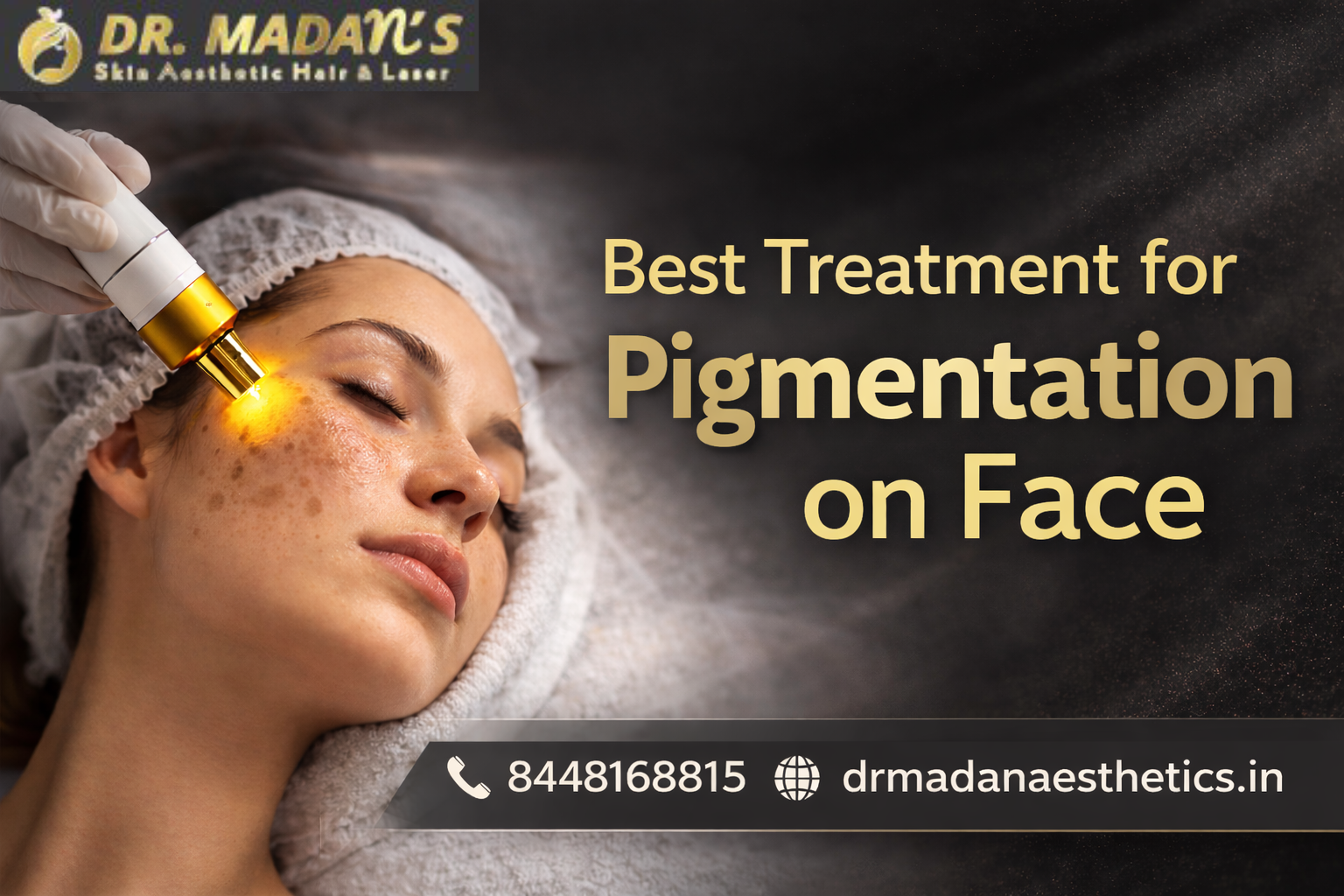
Facial pigmentation is a highly common skin concern, affecting people across all ages and skin types. It is caused by excess melanin production and appears as dark spots, patches, or uneven skin tone. While pigmentation is harmless, it can make your complexion look dull or uneven. This can inadvertently affect your confidence.
There is, however, some good news! With the right skincare routine and dermatological treatments, you can improve pigmentation significantly. The most effective solution for you depends on the type of pigmentation you have and the factors causing it.
This blog dives deep into the nuances of pigmentation. Read on to get answers to your questions like “What is the best treatment for pigmentation?” or “What is causing pigmentation on my face?”
What Causes Pigmentation on the Face?
Pigmentation is caused when your skin produces too much melanin, the pigment that imparts color to your skin. When this melanin is distributed unevenly across your skin, it results in dark spots or patches.
The most common factors that trigger melanin production are discussed below.
1. Sun Exposure
When it comes to facial pigmentation, sun exposure is almost always to blame. While not the sole cause, ultraviolet (UV) radiation from the sun plays a significant role in triggering melanin production in your skin.
2. Hormonal Changes
Hormonal fluctuations can also trigger the melanocytes into producing melanin. Commonly known as melasma, this condition often leads to the appearance of symmetrical dark patches on the face.
3. Post-Inflammatory Hyperpigmentation
Post-inflammatory hyperpigmentation (PIH) occurs after your skin heals from an inflammation or injury. While your skin heals, it may produce excess pigment, leaving behind dark marks.
4. Genetics and Aging
Your genetics can strongly influence how prone you are to developing pigmentation. Also, natural aging, combined with sun exposure, can lead to age spots and uneven skin tone over time.
Different Types of Facial Pigmentation
The different types of pigmentation can be difficult to differentiate. But with the guidance of a dermatologist, you can identify the type of pigment and determine the most effective treatment.
The sections below discuss the different types of facial pigmentation, along with their characteristics.
1. Melasma
Caused by hormonal imbalances and sun exposure, melasma appears as large brown or grayish patches. It is often more stubborn than other types of pigmentation.
Key characteristics of melasma include:
- Commonly affects women between the ages of 20 and 40
- Symmetrical patches on the cheeks or forehead
- A tendency to recur if not properly managed
2. Sunspots
Also called solar lentigines, sunspots develop after years of sun exposure. They appear as flat and dark spots on areas frequently exposed to sunlight and usually persist without treatment.
Common locations for sunspots include:
- Face
- Hands
- Shoulders
3. Freckles
Freckles are small brown spots that often appear in people with a genetic predisposition. They typically darken with sun exposure.
4. Post-Inflammatory Hyperpigmentation
Post-inflammatory hyperpigmentation (PIH) is often associated with acne, skin irritation, insect bites, allergies, cuts, burns, or cosmetic procedures. These marks may appear in light brown to darker shades, based on your skin tone.
Most Effective Treatments for Facial Pigmentation
What is the best treatment for pigmentation? The answer to this depends on your skin type and the type of pigmentation you have.
Based on a thorough evaluation of your skin, your dermatologist will suggest one of the following treatments.
1. Topical Treatment
Certain skincare ingredients can help reduce melanin production in your skin. This gradually lightens the dark spots.
Your dermatologist may recommend one or more of the following ingredients:
- Vitamin C
- Niacinamide
- Kojic acid
- Azelaic acid
- Alpha arbutin
2. Chemical Peels
Chemical peels make use of exfoliating acids to remove the damaged layers of your skin and stimulate new cell turnover. This helps fade the superficial pigmentation.
Most common peels include:
- Glycolic acid peels
- Lactic acid peels
- Salicylic acid peels
3. Laser Treatments
Laser therapy targets the melanin deposits within your skin. It breaks down the pigment into smaller particles. These are then naturally cleared from your body over time.
At Dr. Madan Aesthetics, the laser treatment for pigmentation costs are highly reasonable with the best quality care. Our procedure is especially helpful in addressing stubborn sunspots and deep pigmentation.
4. Prescription Treatments
If you have persistent pigmentation, your dermatologist may recommend some prescription creams with stronger depigmenting ingredients.
These may include:
- Hydroquinone
- Retinoids
- Combination pigment-correcting formulas
Kindly note that these ingredients must only be used under expert supervision.
Skincare Habits That Help Prevent Pigmentation
While there are several effective remedies for pigmentation, prevention is still better than cure. Listed below are some skincare habits that can help you prevent pigmentation.
- Use a broad-spectrum sunscreen with SPF 30 or above every day, whether at home or going out
- Manage acne early on to prevent post-inflammatory hyperpigmentation
- Include antioxidants like vitamin C, vitamin E, and green tea extract in your skincare routine
- Use gentle skincare products and good-quality cosmetics to prevent irritating your skin
When to Consult a Dermatologist for Pigmentation?
Some forms of pigmentation can be difficult to treat without the help of a professional. Also, seeking expert advice ensures that your skin concern is diagnosed and treated early on in accordance with your skin’s needs. one of the best Dermatologist in Delhi.
It is recommended to consult a dermatologist if:
- Pigmentation spreads rapidly
- Dark patches persist
- Spots appear suddenly
- Spots change appearance
- Pigmentation darkens over time
Ready for an Even-Toned Skin?
Facial pigmentation can be frustrating. However, you can manage it with some patience and the right care. Identifying the cause of pigmentation is a crucial step here. Then, with the guidance of an expert dermatologist, use of targeted skincare ingredients, and the right precautions, you can effectively address your dark spots.